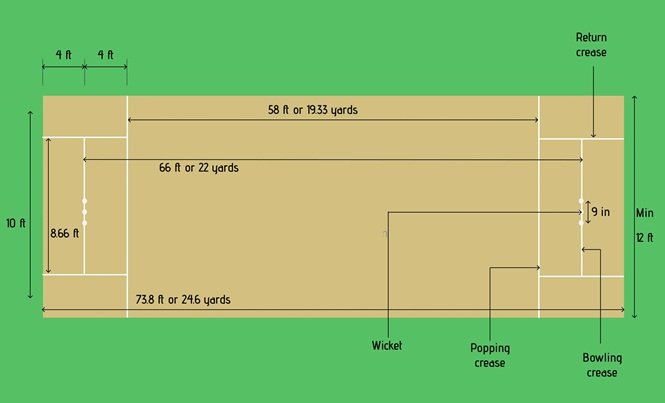
Cricket is a sport of capacity, approach, and precision. While maximum fans interest in batting, bowling, and fielding, an important part of the sport often goes ignored—the creases marked on the pitch. These white traces are not clearly markings; they play an amazing characteristic in identifying whether a batter is stable, whether or not a bowler has added a crook ball, and whether a run-out or stumping is legitimate.
A commonplace question among beginners is, “How many creases are there in cricket?” The smooth answer is that there are 4 one-of-a-kind forms of creases at each surrender of the cricket pitch. These are:
- Bowling Crease
- Popping Crease (Batting Crease)
- Return Crease ( traces)
Together, those markings make sure that the sport is achieved consistent with the Laws of Cricket.
Understanding Cricket Creases
The cricket pitch is 22 yards (20.12 metres) long. At both ends of the pitch, several white traces are drawn. Each line has a selected cause and enables umpires to make vital decisions at a few degree in the game.
Although many humans assume there are first-class or 3 creases, there are simply four types of creases used at each end of the pitch.
Types of Creases in Cricket
| Crease | Purpose |
|---|---|
| Bowling Crease | Holds the three stumps and defines the wicket line. |
| Popping Crease | Determines whether a batter is inside or outside the crease. |
| Return Crease (Left) | Restricts where the bowler’s back foot may land. |
| Return Crease (Right) | Forms the other boundary for the bowler’s back foot. |
1. Bowling Crease
The bowling crease is the horizontal line on which the stumps are positioned.
Length
- 8 ft 8 inches (2.64 metres)
This crease connects the 3 stumps and acts as the reference line for the wicket.
Importance
The bowling crease is used to:
- Position the wickets successfully.
- Measure the region of the popping crease.
- Help umpires choose our great dismissals.
Although gamers no longer often talk about it within the course of commentary, it forms the foundation of all exclusive crease measurements.
2. Popping Crease (Batting Crease)
The popping crease is the most critical line for batters.
It is placed 4 feet (1.22 metres) inside the front of the bowling crease.
Whenever a batter runs the diverse wickets, they want to ground their bat or a part of their frame behind this line to complete a run successfully.
Why Is It Important?
The popping crease is used for:
- Run-out alternatives
- Stumping picks
- Completing runs
- Determining whether or not or now not or now not the striker is effectively within the crease
If a batter is outside the popping crease and the wicket is placed down legally, they will be given out.
3. Return Crease
There are two return creases at each surrender of the pitch.
These are vertical strains drawn at proper angles to the bowling crease.
Purpose
The pass decrease lower back creases make sure that the bowler presents the ball from inside the creases.
If the bowler’s lower back foot lands outside the crease at some unspecified time in the future of shipping, the umpire calls it a No Ball.
This law prevents unfair bowling angles and maintains consistency.
Measurements of Cricket Creases
| Crease | Measurement |
| Bowling Crease | 2.64 metres |
| Distance to Popping Crease | 1.22 metres |
| Return Crease Extension | At least 2.44 metres behind the popping crease |
These modern-day measurements are determined in worldwide cricket, domestic competitions, and most professional fixtures.
Why Are Cricket Creases Important?
Without crease markings, umpires find it hard to make correct selections.
Creases assist in deciding:
- Whether a batter is appropriately within the crease.
- Whether a run has been finished.
- Whether a batter has been stumped.
- Whether a bowler has bowled legally.
- Whether a run-out appeal is legitimate.
The modern era, along with UltraEdge, Hawk-Eye, and television replays, regularly uses crease lines to help the 1/3 umpire in making close picks.
Common Situations Involving Creases
Run Out
A batter attempting a run wants to make their ground behind the popping crease earlier than the fielding component breaks the stumps.
Stumping
When managing a spinner, if the batter steps out of the popping crease and misses the ball, the wicketkeeper can dislodge the bails. If no part of the batter or bat is grounded inside the lower part of the crease, the batter can be given out stumped.
No Ball
Fast bowlers should keep their front foot behind the popping crease and their back foot in the flow decrease again crease. If they fail to perform that, the delivery can be declared a no-ball.
Interesting Facts About Cricket Creases
- Every cricket ground follows the identical stylish crease measurements.
- Creases are repainted in advance of each in shape.
- Third umpires depend closely on crease markings sooner or later for near options.
- Even a small part of the bat grounded within the return of the popping crease can keep a batter from being run out.
- Bowlers exercise their run-up carefully to avoid overstepping the popping crease.
Frequently Asked Questions
1. How many creases are there in cricket?
There are four sorts of creases at every give up of the pitch: one bowling crease, one popping crease, and return creases.
2. Which crease is most crucial for batters?
The popping crease is the most crucial as it determines whether or not a batter is appropriately in their ground at some point in the future of runs, stumpings, and run-out situations.
3. What is the motive of the bowling crease?
The bowling crease is where the wickets are located and serves due to the fact the reference element for the crease measurements.
4. Why are cross-returned creases crucial?
Return creases make certain that bowlers deliver the ball legally by keeping their lower returned foot inside the legal area.
5. What takes place if a bowler crosses the crease?
If a bowler oversteps the popping crease with the front foot or goes back outside the go back crease, the umpire can call a no-ball.
Conclusion
Understanding cricket creases allows game enthusiasts and lovers to recognize the finer details of the game. While batting and bowling frequently acquire the most interest, the crease markings are essential for ensuring sincere play and correct umpiring. From figuring out strong runs to checking prison deliveries, every crease has a specific purpose. The next time you watch a cricket match, be aware of how regularly umpires, players, and television replays talk over the ones with the strains—they will be the most vital markings at the cricket field.
